In short: Rehab lead generation is how a treatment center gets people who need care to call, chat or fill in a form. You can buy leads and calls from vendors, or earn them through search, your Google Business Profile, referral partners and alumni. Bought leads are fast but often shared and carry legal risk when payment is tied to referrals. Earned leads take longer, but you own them. Judge every source by cost per admission.
A vendor emails your CEO: “50 exclusive detox calls a month, starting next week.” It sounds like the answer to an empty bed board. Three months later, admissions says half the calls were for the wrong level of care, a third were out of network, and two callers said they had already spoken to three other programs that morning.
That gap between a lead and an admission is what most rehab lead generation pitches leave out. This guide explains how buying addiction treatment leads actually works, where the legal lines are, how to vet a vendor, and how to build lead sources your center owns. It is written for owners, CEOs and admissions directors, not marketers.
What is rehab lead generation?
Rehab lead generation is any activity that produces a first contact from someone looking for addiction treatment: a phone call, a web form, a chat, or an insurance verification request. The person might be the future patient, a parent or spouse, or a professional making a referral. Over time, the cheapest of those leads tend to come from organic search, which is what addiction treatment SEO is built to grow.
Every lead comes from one of two places. Either you buy it from someone who found the person first, or you earn it because the person found your center directly. Most drug rehab and detox programs use some mix of both. The question is which mix gives you the most admissions for the money, and which one you can still rely on in two years.
Buying vs earning rehab leads
The two approaches to addiction treatment lead generation behave very differently. Here is how they compare on the things that matter to a treatment facility.
| Bought leads | Earned leads | |
|---|---|---|
| Speed | Calls can start within days | Usually builds over 3 to 12 months |
| Who owns the source | The vendor | Your center |
| Shared with other centers | Often, unless truly exclusive | No |
| Cost structure | Per lead or per call, forever | Mostly fixed, falls per admission as you grow |
| Control over the message | Low: the vendor speaks first | High: the family meets your center first |
| Legal risk | Higher if payment tracks referrals | Low when done honestly |
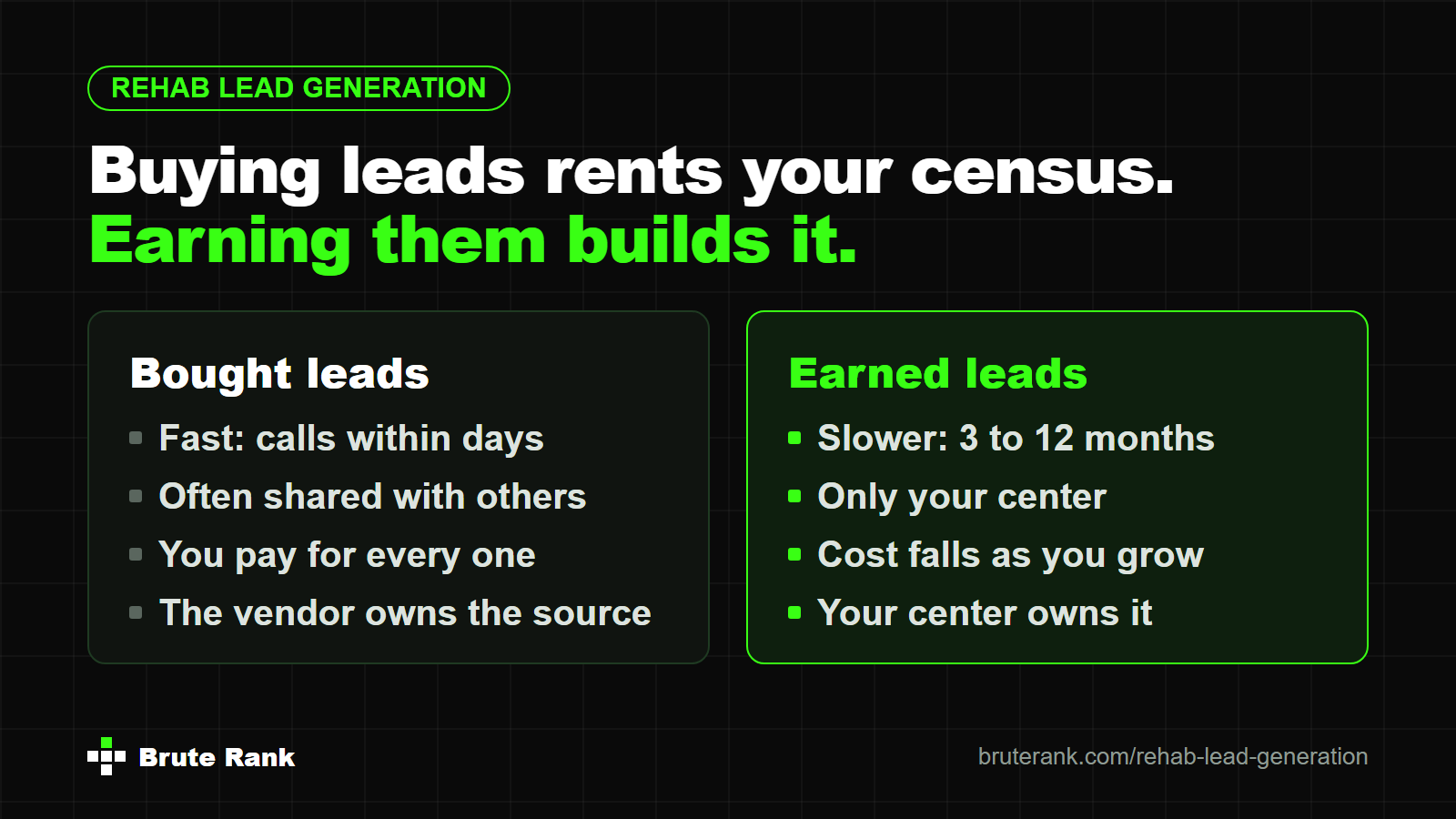
Neither column is all good or all bad. A new program with open beds may need bought calls this month. But a recovery center that relies only on bought leads is renting its census, and the rent can rise or disappear at any time.
How buying addiction treatment leads works
Lead vendors find people searching for help, usually through ads, directory-style websites or national helpline numbers, and pass those inquiries to treatment centers for a fee. The common pricing models are:
- Pay per lead: you pay for each form or contact record, whether or not the person ever answers the phone.
- Pay per call: you pay for each inbound call, often only after it lasts a minimum number of seconds. Check how the vendor treats wrong numbers, job seekers and callers who need a level of care you do not offer.
- Shared leads: the same person is sold to several centers. Whoever calls back first usually wins.
- Exclusive leads: the person is sent only to you. Ask how the vendor proves this.
- Pay per admission or per patient: you pay only when someone is admitted. This sounds safest for your budget, but it is the model most likely to look like paying for referrals, which is where federal and state law come in.
Many helpline numbers and “find a rehab” sites are run by marketers, not clinicians. Families often do not know who they are talking to. That matters for your reputation, because the first voice a family hears shapes what they think of your center.
Patient brokering: the legal line in rehab lead generation
Patient brokering means paying, or receiving payment, for steering a patient to a particular provider. In addiction treatment it is a federal crime, and several states have their own laws on top.
- Federal law (EKRA): the Eliminating Kickbacks in Recovery Act, 18 U.S.C. § 220, makes it a crime to knowingly and willfully pay or receive remuneration to induce or reward a referral to a recovery home, clinical treatment facility or laboratory. Penalties reach a fine of up to $200,000, up to 10 years in prison, or both, for each occurrence. It applies to services covered by any public or private health care benefit program, so commercial insurance is included, not only Medicare and Medicaid.
- State law: Florida’s Patient Brokering Act (section 817.505, Florida Statutes) makes it a felony to pay or receive a commission, bonus, rebate, kickback or bribe to induce patient referrals. Other states have similar rules, so check where you operate and where your patients come from.
- Deceptive referral services: in May 2022 the FTC brought its first case under the Opioid Addiction Recovery Fraud Prevention Act of 2018, against R360 and its owner. The FTC said the company told people it would connect them with treatment centers chosen through a rigorous, expert evaluation, when the choices were made by someone with no expertise in addiction treatment. The order included a $3.8 million civil penalty judgment, suspended because the defendants could not pay.
- Advertising rules: Google requires addiction treatment advertisers to be certified, and LegitScript certification is required to run these ads on Google, Meta and Microsoft. We cover the cost side in our guide to rehab keywords cost.
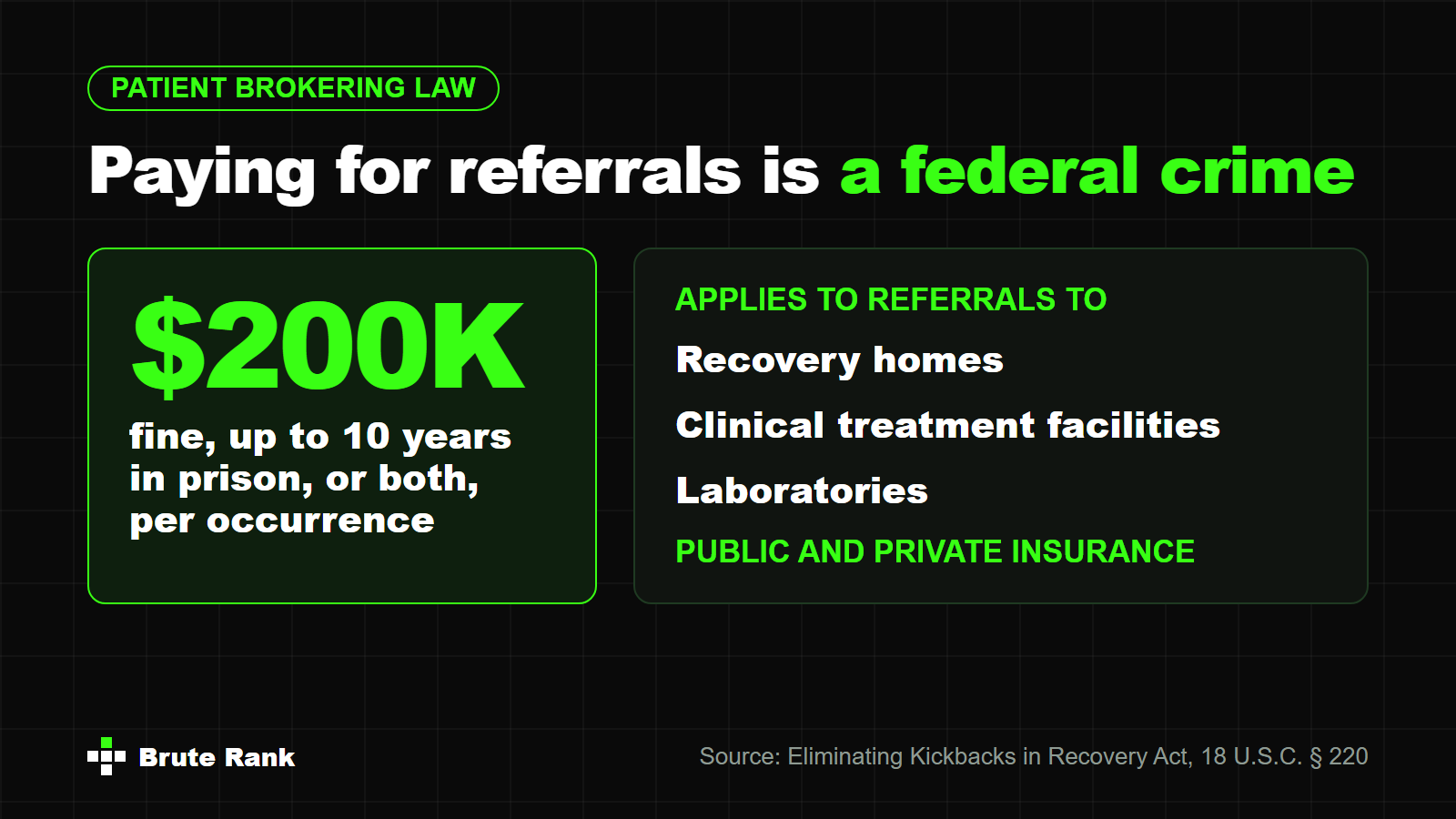
The practical rule: payment that rises with the number of patients referred or admitted is the pattern to avoid. Fixed fees for advertising services are a different arrangement, but the line depends on the details. Have a healthcare attorney review any lead vendor contract before you sign it. This article is general information, not legal advice.
How to vet a rehab lead vendor
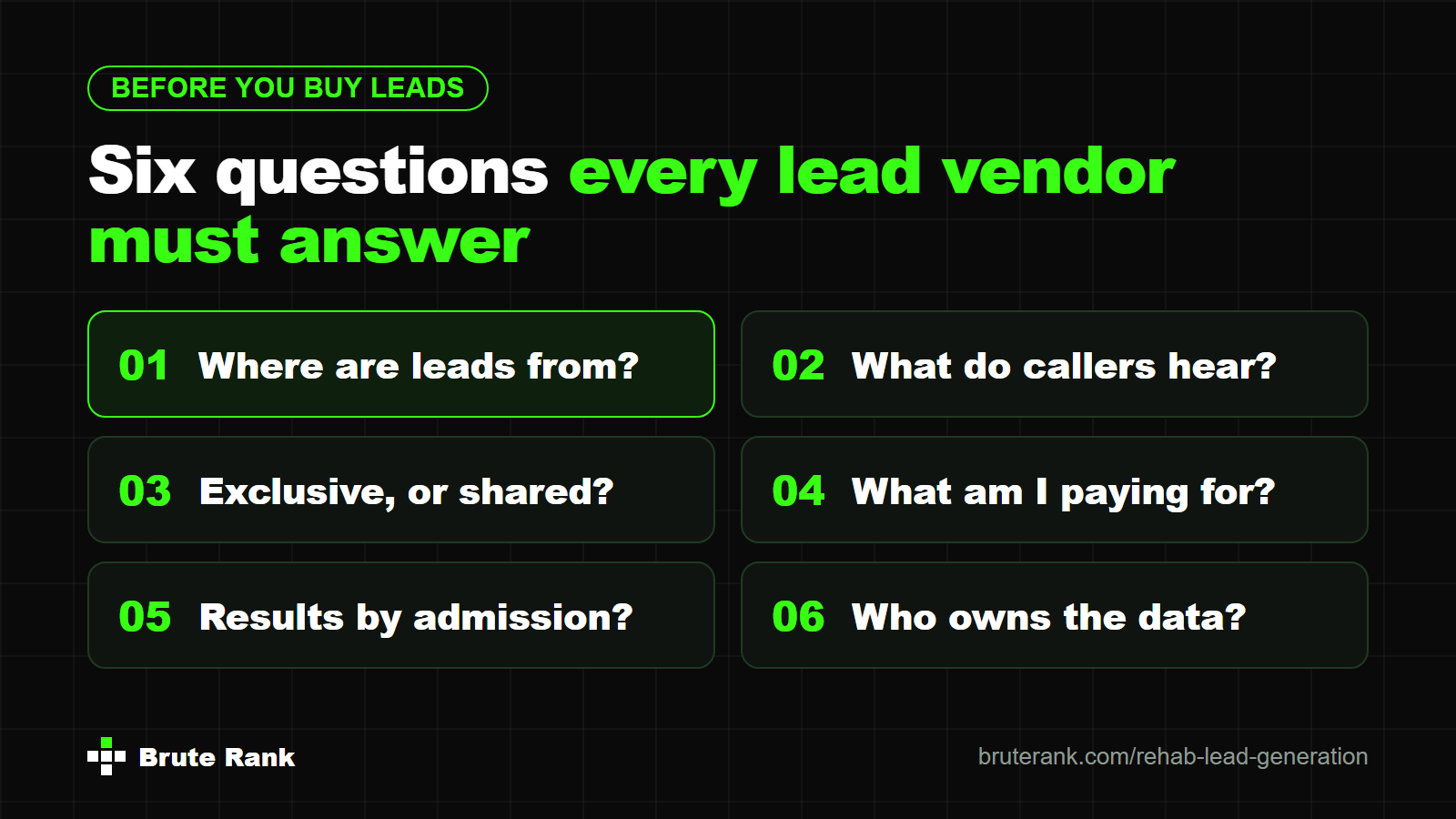
If you do buy addiction treatment leads, a short interview tells you most of what you need to know. Ask every vendor these questions, and get the answers in writing.
- Where do the leads come from? Ask for the exact ads, websites and phone numbers. If the vendor will not show you, walk away.
- What does the caller hear first? Listen to recordings. The family should know who they are talking to and should not be told a call center is your facility.
- Are the leads exclusive? If yes, how is that proven? If no, how many other centers receive the same person?
- What exactly am I paying for? A lead, a call of a certain length, or something tied to admissions? Payment linked to referrals or admissions needs legal review.
- How are bad leads handled? Wrong level of care, out of network, out of state, job seekers. Ask for the credit process.
- Can I see results by admission, not by lead? A vendor that reports only lead counts is selling volume, not patients.
- Who owns the data and the phone numbers? If the relationship ends, do your past callers still reach you?
- Is their advertising certified? Paid ads for addiction services need certification, so ask how theirs are approved.
How to earn rehab leads you own
Earned leads come from people who find your center directly. They take longer to build, but every admission they produce lowers the cost of the next one. These are the channels that produce the best drug rehab leads over time:
Search pages for each level of care
Someone searching “medical detox near me” needs something different from someone searching “IOP for working adults”. One page per program (detox, residential, PHP, IOP, outpatient, sober living if you run it) matches those searches and tells families exactly what you offer. This is the core of treatment program SEO.
Google Business Profile and the map
Most “near me” searches show a map pack before any website. A complete, accurate Google Business Profile with real photos, correct hours and honest reviews puts your center in front of local families at the moment they search. See our approach to local SEO for treatment centers.
Insurance and location pages
Families often search with their insurance plan or town in mind. Accurate pages for the plans you are in network with and the areas you serve capture those searches without paying a vendor for each one. List only plans you actually accept.
Referral relationships
Therapists, primary care doctors, hospital discharge planners, employee assistance programs and alumni families send some of the best-fit patients. Build these relationships with education, fast clinical responses and honest updates, never with payment for referrals.
Alumni and family programs
People who finished treatment with you, and their families, often become your strongest advocates. An active alumni program keeps your center in their minds when a friend or coworker needs help.
AI answers
ChatGPT, Gemini and Google’s AI Overviews increasingly answer “where can I get detox in Baton Rouge?” directly. They can only name centers whose websites state clear, consistent facts about services, levels of care, insurance and location.
Together these channels are the long-term side of rehab lead generation, and they are what we mean by behavioral health marketing: building demand that comes to you, rather than buying it from someone else.
A lead is not an admission
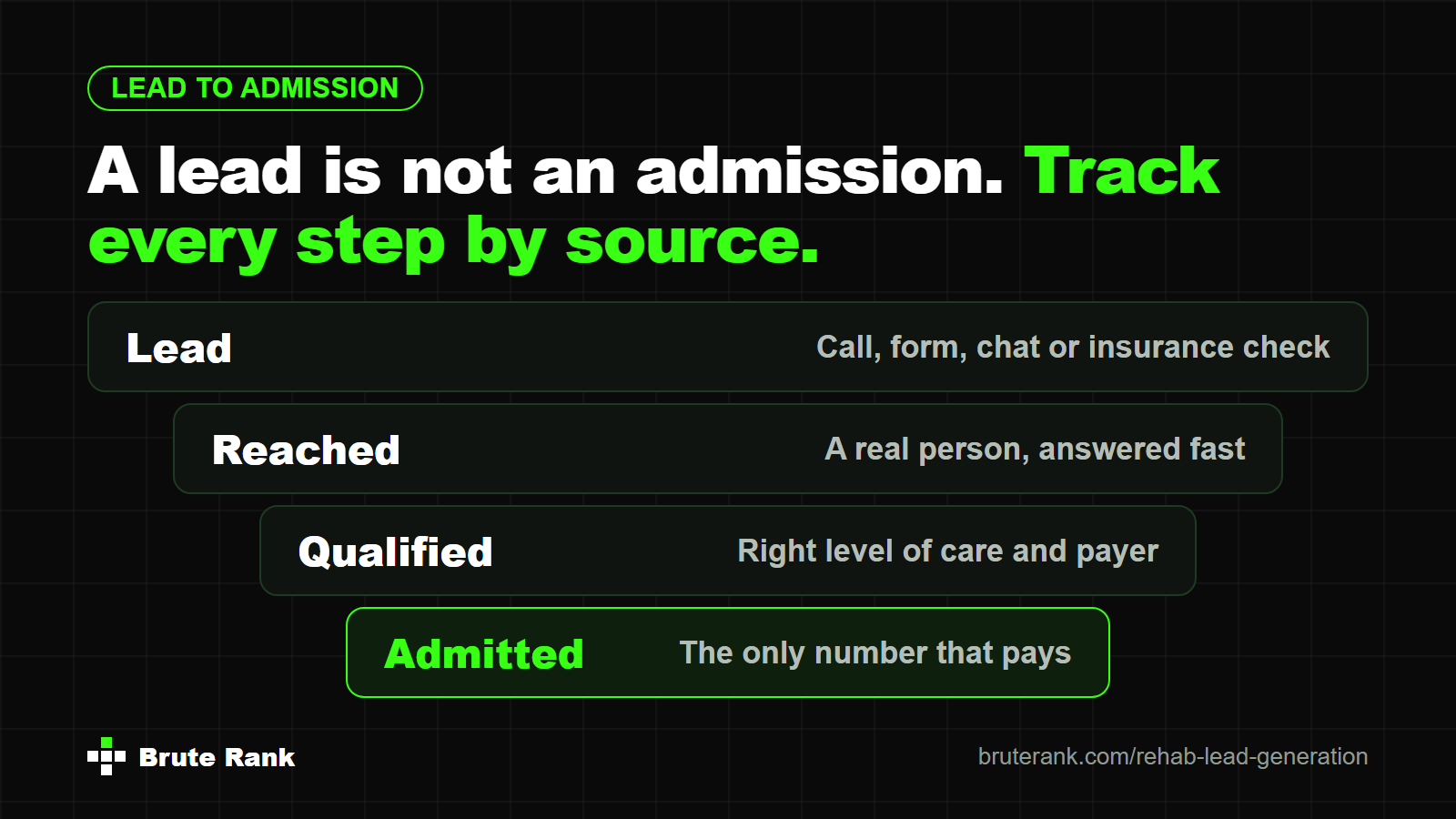
Whatever the source, rehab lead generation only pays off if your team turns the lead into an admission. The steps that decide it:
- Answer fast. Families call several programs. Research on response time shows how quickly the odds fall, which we cover in our guide to speed to lead for treatment centers.
- Qualify kindly. Confirm clinical fit, level of care and payer, and refer out warmly when you are not the right place.
- Verify benefits quickly. A slow insurance check loses people who were ready to come in.
- Log the source of every inquiry. Without it, you cannot tell which lead sources produce admissions and which only produce calls.
How to measure rehab lead generation: cost per admission
The cost of a lead tells you very little. The number that matters is what each source costs per admitted patient:
Cost per admission = monthly cost of the source ÷ admissions from that source
Run it every month for each vendor, your paid search, your SEO and your referral work. Bought leads often look cheap per lead and expensive per admission once you remove duplicates, wrong-fit calls and people who already chose another program. Earned leads usually look expensive in the first months and cheaper every quarter after that. Our addiction treatment center marketing plan shows how to set this report up.
A 90-day plan to own more of your rehab lead generation
You do not have to cancel every vendor tomorrow. Shift the balance step by step:
- Days 1 to 30: measure. Tag every inquiry by source in your CRM. Calculate cost per admission for each vendor and channel. Have an attorney review every lead contract.
- Days 31 to 60: fix the foundation. Complete your Google Business Profile, build or rewrite one page per level of care, and make sure every page has a tappable phone number.
- Days 61 to 90: build owned sources. Start a referral outreach routine, launch an alumni contact program, and publish insurance and location pages for the plans and areas you serve.
- Every month after: cut the vendors with the worst cost per admission first, and move that budget into the channels you own.
Key takeaways
- Rehab lead generation means getting people who need treatment to contact you, either by buying leads or earning them.
- Bought leads are fast but often shared, and payment tied to referrals or admissions can break federal and state patient brokering laws.
- Vet every vendor: lead sources, call recordings, exclusivity, payment terms and data ownership.
- Earned leads from search, your Business Profile, referral partners and alumni build an asset your center owns.
- A lead is not an admission. Judge every source by cost per admission.
Rehab lead generation: frequently asked questions
What is rehab lead generation?
Rehab lead generation is how an addiction treatment center gets first contact from people seeking care, through calls, forms, chats or insurance verification requests. Leads are either bought from vendors or earned through channels the center owns, such as search, its Google Business Profile, referral partners and alumni.
Is it legal to buy leads for a treatment center?
Buying advertising can be legal, but paying for patient referrals is not. Under the Eliminating Kickbacks in Recovery Act, paying or receiving remuneration to induce referrals to a recovery home or clinical treatment facility is a federal crime, and many states have their own patient brokering laws. Have a healthcare attorney review any lead vendor contract.
What is patient brokering?
Patient brokering is paying, or being paid, to steer a patient to a specific provider. Federal law (18 U.S.C. § 220) sets penalties of up to $200,000 and 10 years in prison for each occurrence for referrals to recovery homes, clinical treatment facilities and labs, and states such as Florida treat it as a felony.
What is the difference between exclusive and shared rehab leads?
An exclusive lead is sent only to your center. A shared lead is sold to several centers at once, so the person may hear from multiple programs and usually goes with whoever responds first. Always ask a vendor how exclusivity is proven.
How do you generate rehab leads without buying them?
Build one page per level of care, complete your Google Business Profile, publish accurate insurance and location pages, develop relationships with therapists, doctors and discharge planners, and keep in touch with alumni. These channels take months to build but keep producing inquiries without a fee per lead.
How much do rehab leads cost?
Prices vary by vendor, pricing model and market, so compare on cost per admission rather than cost per lead. For reference, core rehab keywords cost an estimated $10 to $19 per click on Google Ads in Ahrefs US data from September 2026, before any vendor markup.
How do I know which lead source is working?
Log the source of every call, form and chat in your CRM, then divide each source’s monthly cost by the admissions it produced. Review it monthly, and on a rolling 12-month basis for slower channels like SEO.
Brute Rank works only with behavioral health providers. We help addiction treatment centers build lead sources they own: program pages, local visibility, insurance and location pages, and the tracking to see which sources produce admissions. If you want to know where your next admissions could come from, request a free SEO audit.
Sources
- U.S. Code, 18 U.S.C. § 220: Illegal remunerations for referrals to recovery homes, clinical treatment facilities, and laboratories (Cornell Legal Information Institute)
- U.S. Code, 18 U.S.C. § 24: Definition of health care benefit program
- Florida Statutes, section 817.505: Patient brokering prohibited
- FTC: FTC Hits R360 and its Owner With $3.8 Million Civil Penalty Judgment (May 17, 2022)
- Google Advertising Policies Help: Healthcare and medicines, Addiction services
- LegitScript: Addiction Treatment Certification
- Ahrefs Keywords Explorer, US data, pulled September 27, 2026